.svg)
.svg)

Why QSR Operators Are Inverting the Construction Sequence
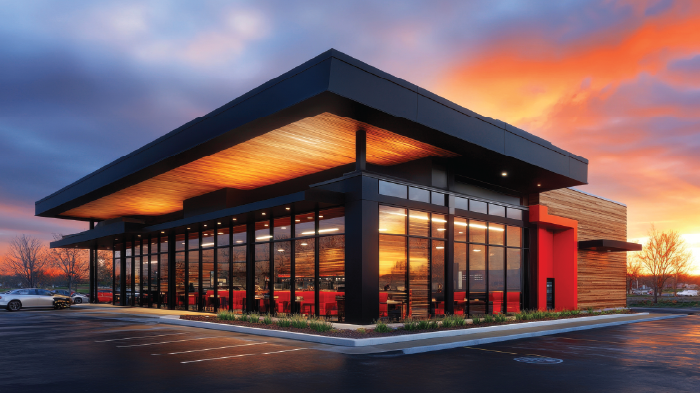
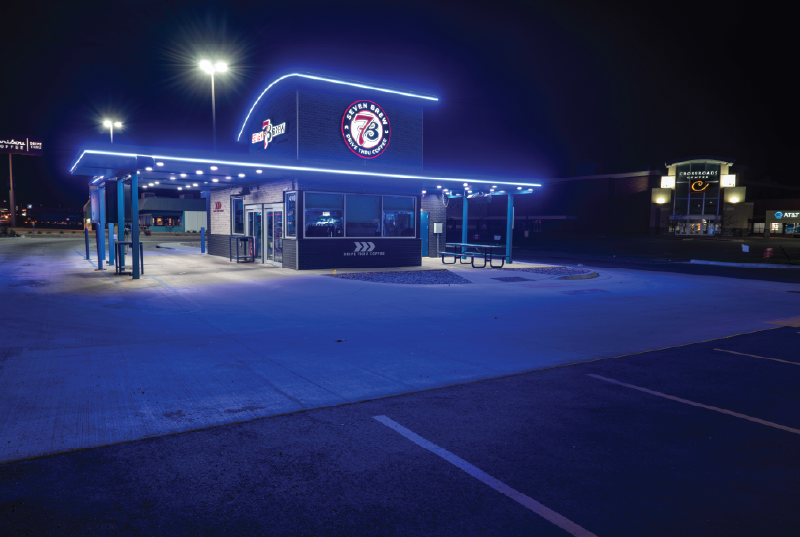
There's a construction pattern showing up everywhere in quick-service restaurants (QSR) and small-format retail right now that flips the traditional sequence on its head. Instead of breaking ground and building up, operators are getting the site fully done first, then craning a finished building onto it. Slab poured, drive-thru lanes striped, utilities stubbed, landscaping in. Then a truck shows up, a crane lifts a building off the trailer, and a few weeks later, the store is selling.
It looks like a stunt. It's not. It's a deliberate response to a development problem that's been crushing QSR margins for years: every week of construction is a week of lost revenue on a concept where the pro forma assumes high-velocity sales from day one.
What the inverted sequence looks like
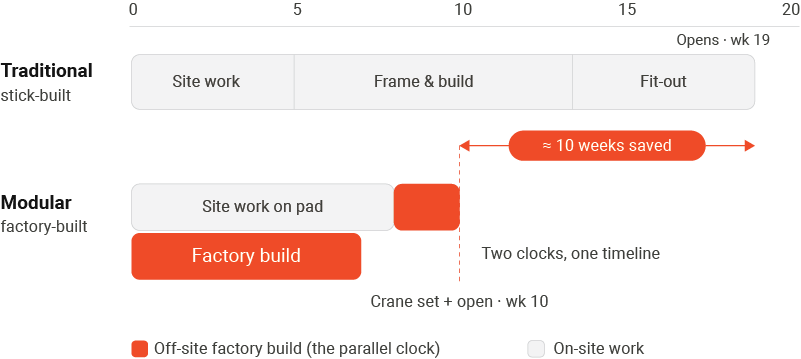
A traditional stick-built QSR runs 18 to 20 weeks from groundbreaking to grand opening. The modular version cuts that down to eight to 10 weeks. The savings come from running two clocks at once, and that's the key with modular: while the site work happens on the pad, the building is being manufactured a thousand miles away in a factory. There are also fewer surprises along the way, since the building gets built in a closed factory environment where the same crew builds the same kit every day, the materials don't sit in the weather, and a thunderstorm doesn't shut the job down for a week. That tighter loop is also more environmentally friendly: less crew travel, less material waste from on-site cuts, less rework, and a faster overall turnaround. By the time the slab is cured and the drive-thru is poured, the building is on a truck.
7 Brew is the most visible example. Their roughly 500-square-foot modular building gets placed on lots ranging from 8,000 to 50,000 square feet, typically as an outparcel to a retail shopping center with highway exposure. Buildings ship in three main pieces from a Springfield, Missouri warehouse and get assembled on the pad in hours. But the same pattern is showing up across the category. Smalls Sliders drops 800-square-foot "cans" made from repurposed shipping containers onto half-acre sites, about half the footprint of a typical quick-serve restaurant. Little Caesars launched its POD program in December 2023, with modular units manufactured off-site and craned onto a concrete foundation. Everbowl, Wing Zone, Capriotti's, Stretch Zone, and Big Chicken are all rolling out versions of the same approach.
Why the sequence matters for feasibility
The interesting part for anyone working on the site side of the equation: the inversion changes what a "feasible" retail site looks like.
When the building is the slow thing, you optimize around the building. Stack the trades, fight for inspector availability, manage weather. When the site is the slow thing, you optimize around the pad. That means the constraints that actually drive go/no-go shift to civil and entitlement: how fast can utilities be brought in, what's the drainage situation, can you get a curb cut where you need it, does the jurisdiction allow the prefab structure as a permanent building.
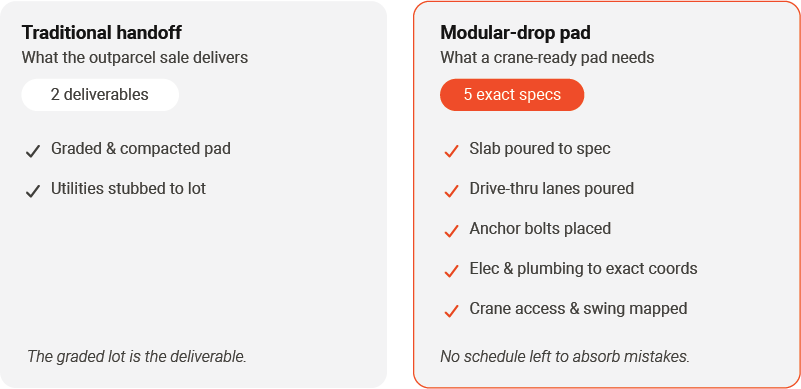
It also changes what "pad-ready" means as a retail deliverable. A traditional outparcel sale hands over a graded lot with utility stubs. A pad ready for a modular QSR drop needs the slab and drive-thru lanes poured to spec, anchor bolts placed, electrical and plumbing stubbed to exact coordinates, and crane access mapped. The on-site work has to be exact, because there's no building schedule left to absorb mistakes.
The lot sizes that work, and the ones that don't
The economics push toward small, weird retail sites that traditional builds couldn't justify. A 500-square-foot building on an 8,000-square-foot lot leaves room for double drive-thru lanes, a canopy, queuing, and not much else. That's the point. Little Caesars notes the modular approach requires a quarter acre instead of the over-an-acre footprint a traditional stick build would need, which opens up outparcels and infill corners that wouldn't have penciled before.
Where it breaks: dense urban infill, jurisdictions that won't permit prefab structures as permanent buildings, lots where queue stacking would block right-of-way, and corners where the drive-thru circulation just doesn't work. None of that gets easier with a faster building. If anything, the inverted sequence makes site selection more punishing because you can't fix a bad site by spending another month on construction.
What this means for the people running site feasibility
If you're testing dozens of outparcels a week, looking for QSR-viable pads, the modular pattern shifts the screening criteria. Building size and parking ratios matter less. Drive-thru circulation, lot geometry, stacking depth, sightlines from the road, and utility proximity matter more. The faster the building goes up, the more value sits in picking the right pad in the first place, because the back end of the schedule isn't there to absorb mistakes anymore.
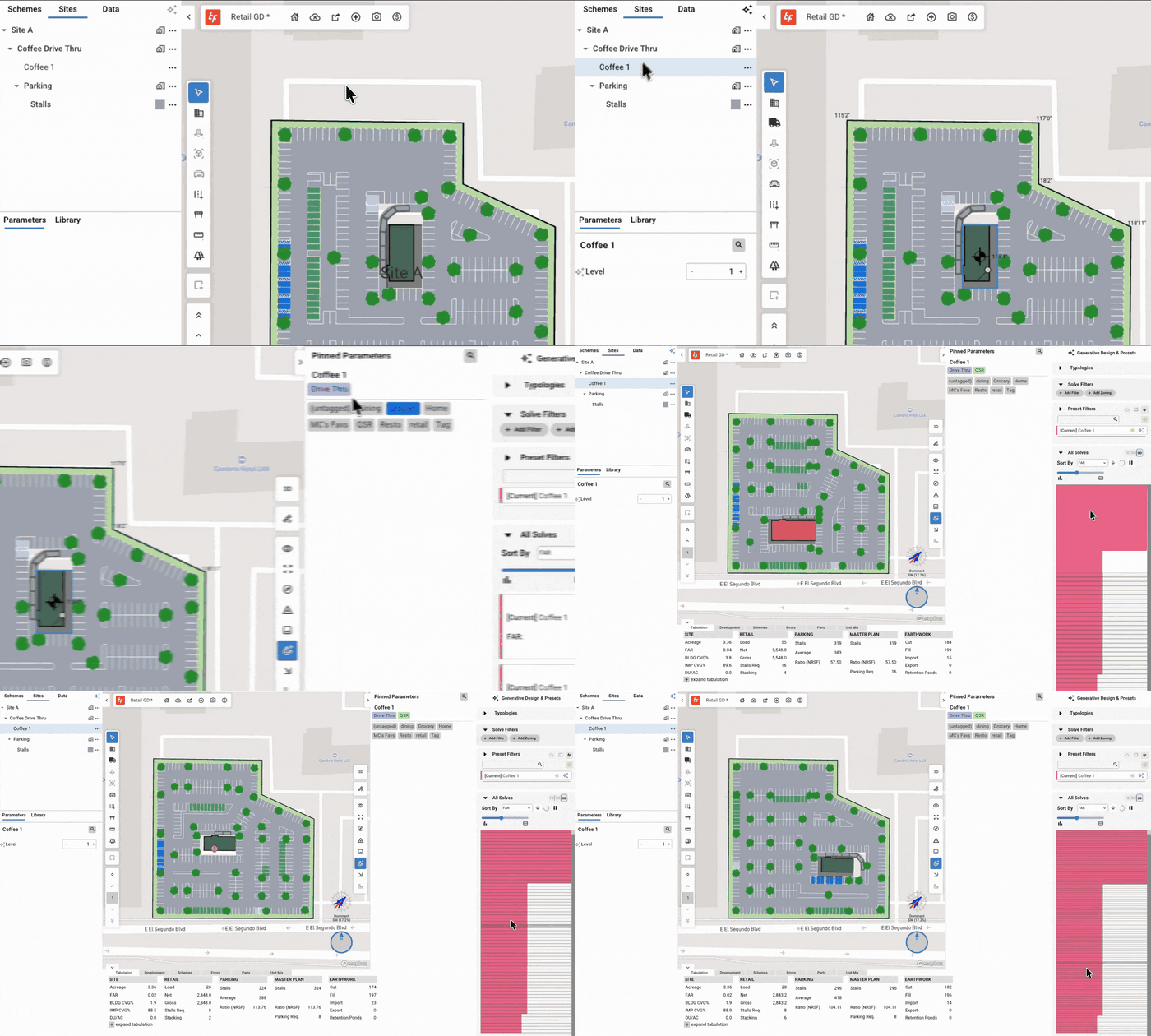
This is exactly the kind of screening problem TestFit was built for. Generative drive-thru layouts let you test queue depth, lane geometry, and circulation across a list of candidate retail pads in minutes instead of weeks, so the sites that actually work surface fast and the ones that don't get killed before they eat any deal time. When the building goes up in eight weeks, the slow part of development moves to the front of the process, and that's where the screening tools have to keep up.
The operators who are scaling fastest in this category aren't winning on building design. They're winning on site selection at speed. That's where the next few years of QSR development gets decided.
Screen Every Pad in Minutes
When the building goes up in eight weeks, the slow part moves to site selection. Test drive-thru geometry, stacking, and circulation across your candidate pads before one eats your deal time.