.svg)

Retail feasibility is rarely a question of whether one prototype works on a site. It's a question of which one fits best, where, and at what return. Most workflows force teams to answer that the slow way, by placing every variant in every viable location and running solves one at a time. The math gets done, but only after hours of repetitive setup that has nothing to do with the deal. The faster a team can compare prototypes side by side, the sooner they know which configuration is worth pursuing.
Retail Updates
Retail Assemblies in Generative Design
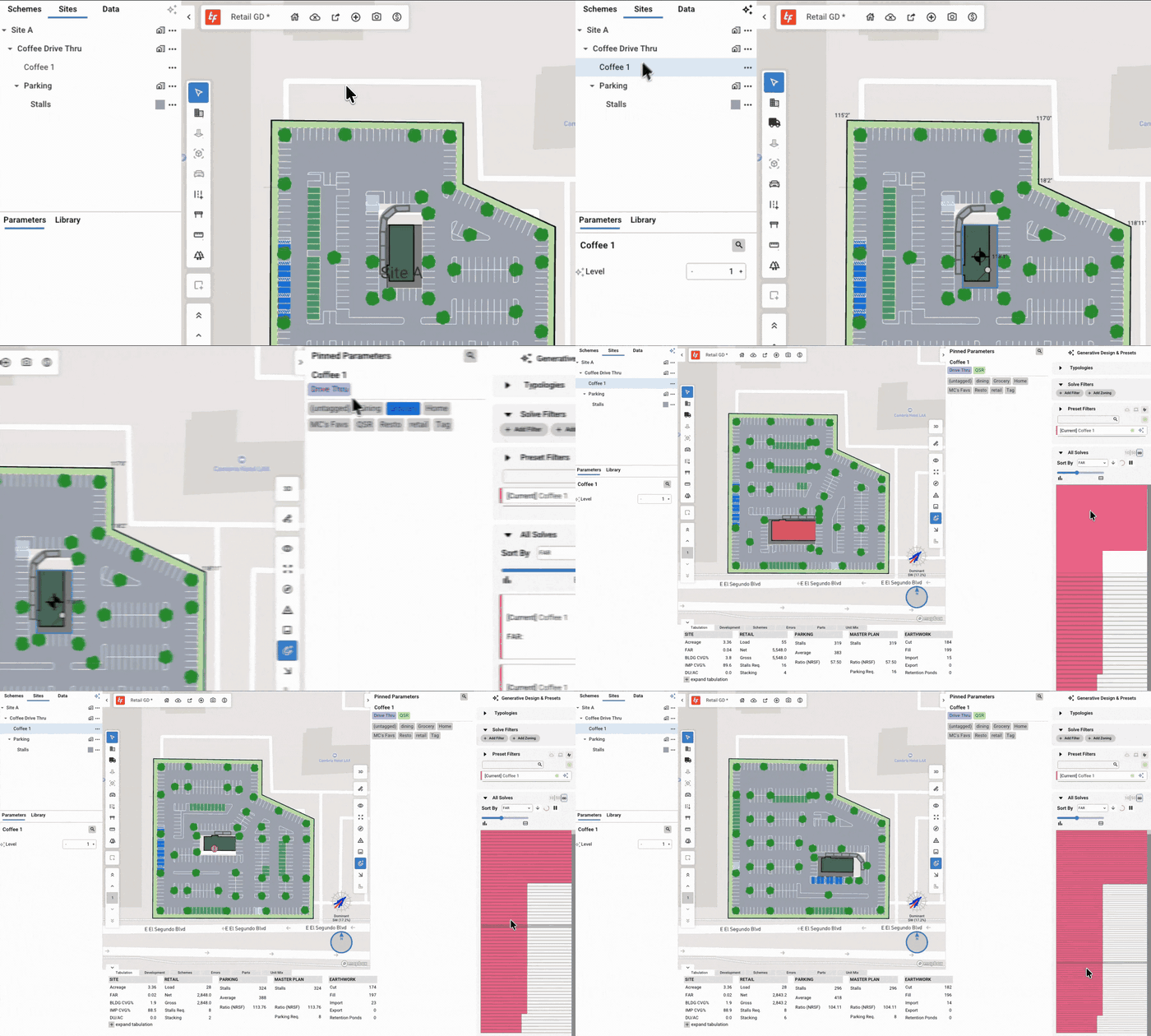
With Retail Assemblies in Generative Design, TestFit cycles through every library item that shares a matching tag, placing each variant across locations on the site in a single workflow. There is no need to manually place each building or build a separate solver preset for every prototype. All tagged variants run iteratively in one automated pass, compressing what used to be hours of setup.
The result is a faster, more thorough comparison across prototypes and locations. The best-fit option surfaces on its own, so retail developers can evaluate more site configurations with less effort and skip the busywork that sits between the data and the decision.
Housing Updates
Cores in Garages
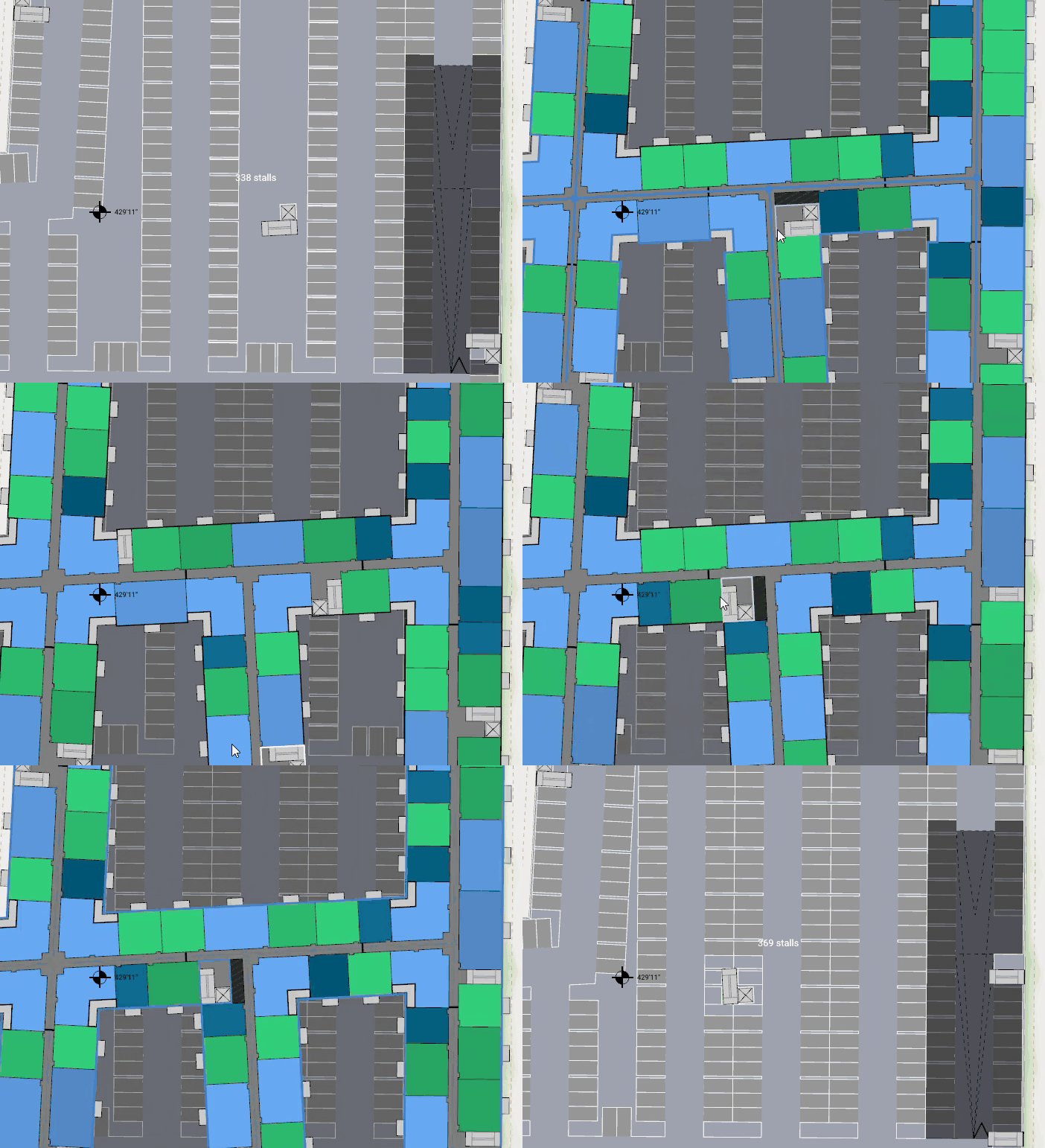
Stair and elevator cores now place and rotate accurately across every floor of garage-integrated buildings, including lower-level garage decks, with full awareness of drive aisles, angled stalls, and core orientation. Buffer zones around each core let parking stalls resolve cleanly, and cores behave correctly in every context, whether they sit internal, external, above-grade, or below.
The payoff is more viable solves out of the box. Less time goes into fixing core placement by hand, and structured parking scenarios can be evaluated with greater speed and confidence.
General Updates
Easement Offsets
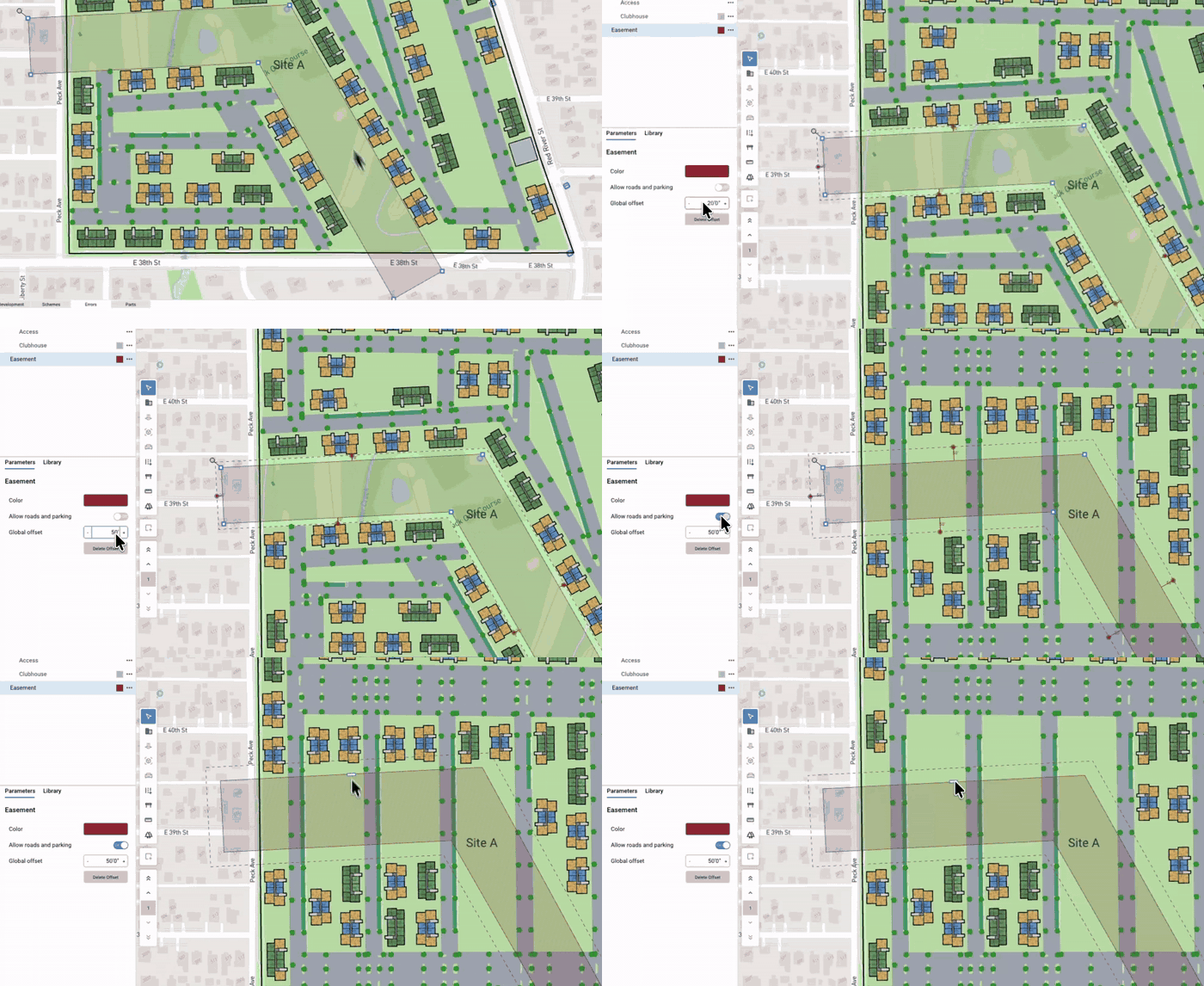
Easement Offsets apply a configurable offset from any easement boundary, pushing the effective build limit inward from the easement line itself. Each side of the offset can be edited individually for granular control, and a toggle determines whether roads and parking are permitted to cross the easement threshold on parcels where only building is restricted.
Sites with easements now model accurately from the first solve, with build limits that reflect the real constraints of the parcel rather than the raw easement line. Less time goes into adjusting geometry, more goes into evaluating viable configurations.
SVG File Support in Reports
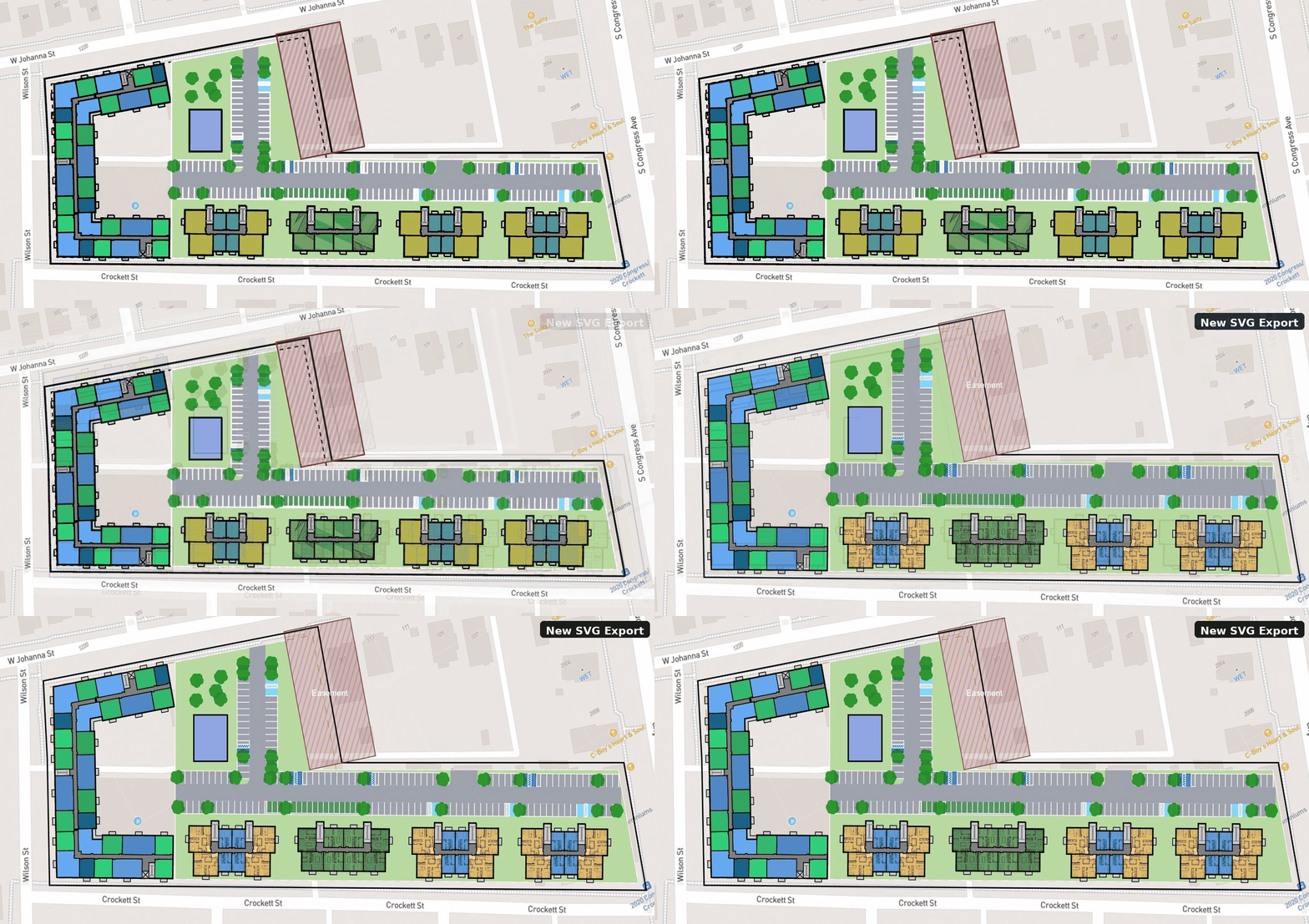
Site plans now export as SVG files that open natively in any browser and embed directly into web-based reports, deal rooms, and internal tools. Reports also render site plan imagery as vectorized lines in SVG, keeping imagery sharp at any size.
Every stakeholder across the deal sees the same clean, accurate site plan. That keeps feasibility reviews moving and cuts the back-and-forth over file formats and image quality, whether the file is shared with a capital partner, a city planner, or a JV partner.