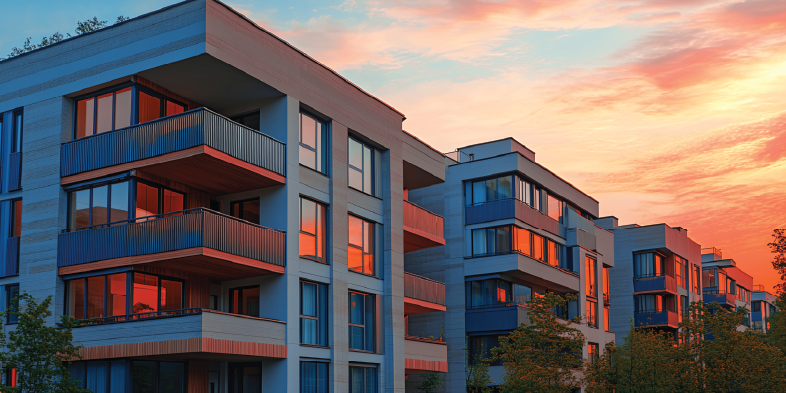




There is a data center in your neighborhood. You probably walked past it this week. It might look like a nondescript office building, a converted retail space, or a structure with just enough architectural detail to blend into a mixed-use block. Inside, it is processing data requests in milliseconds for users nearby. You never had any reason to notice it, and that was entirely the point.
Edge data centers, compact computing facilities positioned close to the people and devices they serve, are becoming one of the most consequential infrastructure stories in real estate. As AI inference, streaming, autonomous systems, and connected devices multiply, the demand for low-latency computing keeps pushing these facilities further into urban and suburban environments. And as community resistance to large-scale hyperscale campuses grows louder, the ability to build smaller, smarter, and less conspicuously has become a competitive advantage.
For real estate developers and land planners, this creates a new kind of opportunity, one that rewards speed, site selection precision, and feasibility clarity from day one.
What Is an Edge Data Center?
A traditional data center is large, remote, and centralized. It serves millions of users from a fixed location, accepting the tradeoff of higher latency in exchange for scale and cost efficiency. An edge data center is the opposite: smaller, distributed, and positioned as close as possible to the end user.
Edge data centers are built to process data closer to where it is generated, reducing transit time and latency. Applications that depend on real-time response, including autonomous vehicles, industrial IoT, cybersecurity automation, and content delivery networks, benefit directly from having compute resources nearby rather than hundreds of miles away.
These facilities range widely in scale. Some are compact, purpose-built nodes tucked into urban neighborhoods. Others are large campus-style deployments serving regional demand. What defines them is not their size but their proximity strategy: positioned at the edge of the network, closer to the users and devices generating the data.
Whether a project is a single-building infill or a multi-acre campus, the site selection and feasibility challenges are real, and front-loading that analysis is what separates developers who move fast from those who get stuck.

Why Edge Data Centers Are Proliferating Now
Three forces are converging to drive rapid edge data center deployment across urban and suburban markets.
AI inference demand. Training large AI models requires massive, centralized compute. Running those models for real-time applications, the inference step, requires low latency, meaning compute needs to be near the user. IDC projects that by 2027, 80 percent of CIOs will turn to edge services to meet AI inference demands, creating sustained pressure to build more edge capacity in population centers.
5G and connected devices. The build-out of 5G networks depends on edge infrastructure to deliver on its latency promises. Every new category of connected device, from smart city sensors to AR/VR headsets to autonomous delivery systems, adds to that demand.
Hyperscale opposition. Large data centers are drawing intense community resistance. Data Center Watch reports that $64 billion worth of U.S. data center projects have been blocked or delayed due to local pushback over noise, power demands, and community impact. Smaller, more contextually appropriate facilities face far less friction on the path to approval.
The edge data center market was valued at $15.4 billion in 2024 and is projected to reach $39.8 billion by 2030, growing at a CAGR of 17.1 percent. That growth is not happening exclusively in remote industrial parks. It is happening downtown, in suburban commercial corridors, and on sites that would not register as data center candidates under the old model.

Hidden in Plain Sight: The Design Imperative
The industrial aesthetic that defined the previous generation of data centers, blank-box exteriors, loading docks, and chain-link perimeters, is increasingly a liability in urban markets. Communities are warier. Planning commissions are scrutinizing contextual fit. And zoning codes are catching up. Kansas City, Loudoun County, and dozens of other jurisdictions have moved to restrict where and how data centers can be built.
The response from many developers has been architectural adaptation. Edge facilities are increasingly designed to integrate with their surroundings, whether through facade treatments, mixed-use ground floors, or siting that minimizes visual impact on adjacent neighborhoods. Activist groups nationwide are now organizing against large-format data center development, a dynamic that makes contextual design a practical consideration at the entitlement stage.
That design work belongs to architects and engineers. What it creates for developers is a more complex site selection problem: the parcels that work for a contextually integrated edge facility are often smaller, more irregular, and subject to more layered zoning constraints than a traditional greenfield data center site. Evaluating them quickly and accurately is where the feasibility process becomes a real competitive differentiator.
Site Selection Complexity in an Urban Context
Finding the right site for an edge data center is not like finding the right site for a warehouse or apartment building. The requirements are specific and non-negotiable.
Power availability is the first filter. Edge facilities need reliable, redundant power at densities that many urban parcels cannot support without utility upgrades. Fiber connectivity, ideally proximity to existing telecom nodes or carrier hotels, is the second. Then come the site-specific constraints: lot size, setbacks, zoning classification, noise ordinance compliance for cooling equipment, and the overall feasibility of fitting the required program onto the available land.
That analysis is iterative by nature. A parcel that clears the power threshold may fail on setbacks. A site with ideal connectivity may sit in a zoning district that requires a special use permit, adding time and uncertainty to the timeline. Developers working at volume need to evaluate dozens of candidates quickly before committing to detailed due diligence.
This is where the speed and depth of the feasibility phase becomes a real competitive lever, regardless of whether the project is a compact urban node or a large-scale regional facility.
How TestFit Supports Edge Data Center Feasibility
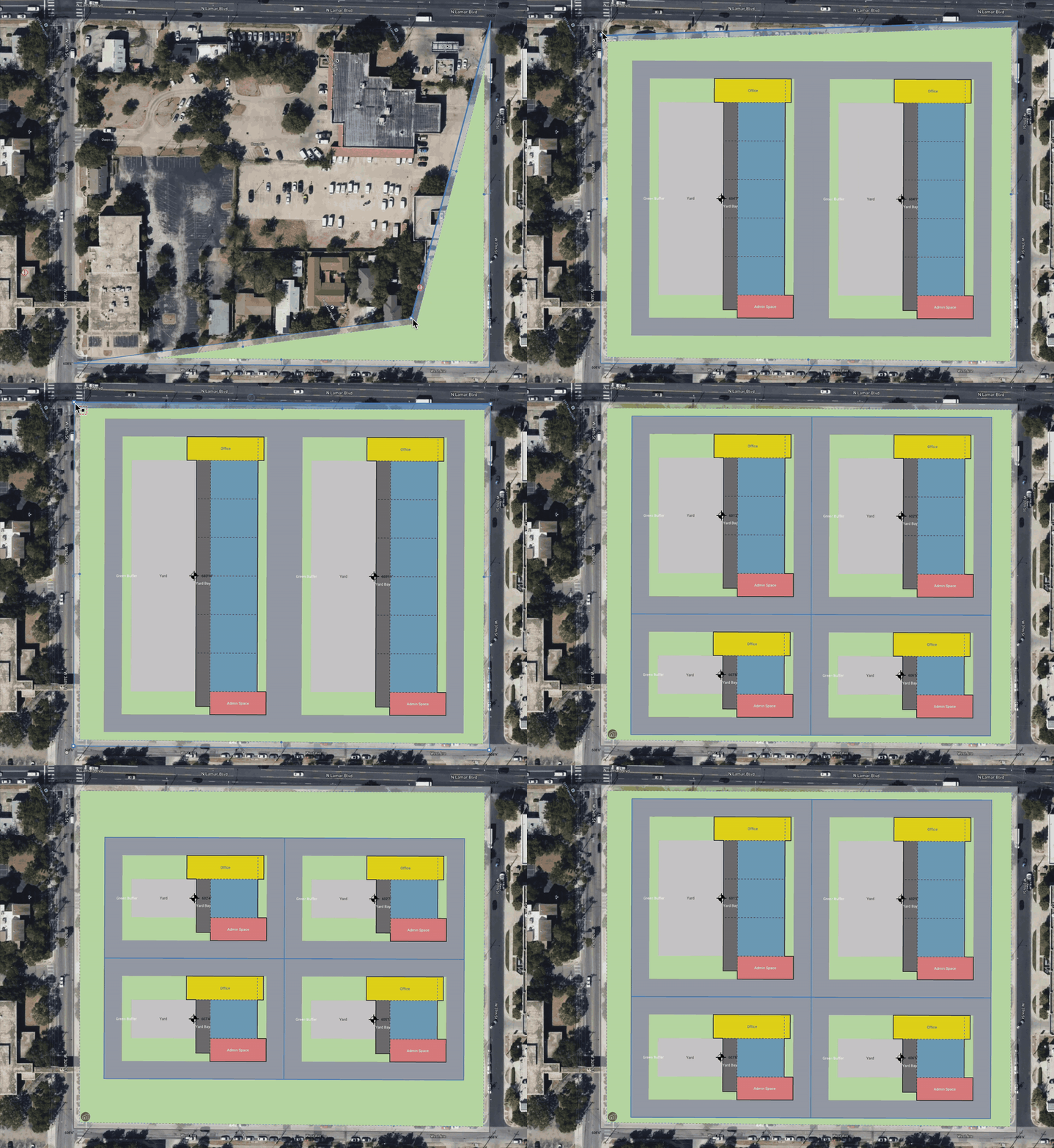
TestFit is purpose-built for the kind of rapid, iterative site analysis that edge data center development demands. Whether a project is a compact urban infill facility or a large campus-scale deployment, the core challenge is the same: understanding what a site can support, quickly, before committing significant capital to due diligence.
TestFit's generative design engine works from the site boundary inward, applying setbacks, zoning constraints, and program requirements to produce feasible building configurations in minutes rather than weeks. For data center developers, that means faster answers to the questions that drive site selection decisions:
- What program fits on this parcel? TestFit calculates buildable area, floor plate options, and gross square footage against the specific constraints of any site, from a tight urban lot to a multi-acre campus. Developers see what is actually achievable before engaging architects or engineers for detailed work.
- How does scale affect feasibility? Edge data centers vary widely in size. TestFit handles the full range, allowing teams to test different facility sizes against the same site and understand where physical and regulatory constraints start to bind.
- How does this site compare to others in the pipeline? With TestFit, evaluating ten candidate sites in the time it previously took to evaluate one is realistic. That throughput changes how developers prioritize and sequence their acquisition work.
- What does the deal look like at this scale? TestFit's quantity takeoff and cost model capabilities give development teams a faster path to underwriting confidence, reducing the number of sites that consume significant capital before being disqualified.
TestFit's Site Intelligence features, which surface contextual data about a parcel and its surroundings, add another layer of value for edge site selection. Understanding zoning classifications, existing infrastructure, and adjacent uses helps teams pre-screen candidates before committing to physical investigation or detailed design work.
The result is a feasibility process that keeps pace with a market moving fast, at any scale.
The Infrastructure Moving Into Your Neighborhood
Edge data centers are not a niche asset class or a distant prospect. They are already here, and the pipeline is growing. More than 1,500 new data centers are currently in development across the United States, with a growing share of them targeting locations where traditional large-format development is no longer viable or welcome.
For developers who can move quickly, evaluate sites at volume, and size their facilities to match what a market actually needs, the opportunity is substantial. The tools to work at that pace already exist.
The data centers your neighbors never noticed are being built right now. The question is whether your team has the workflow to compete for the sites that make them possible.
Find the sites everyone else walks past.
Test any parcel in minutes — massing, program, and deal math before the competition finishes pulling zoning docs. Explore TestFit for data centers →