.svg)

Feasibility runs in sequence. A scheme gets laid out, then it gets priced, then the numbers come back and tell you whether the last two steps were worth taking. That order means design effort is spent before there is any financial signal to spend it against, and it caps how many options a team can realistically evaluate. Most developers commit to the scheme that fit the site rather than the one that earned the most on it, because the second answer costs too much to find. The site usually supports something better.
Mixed Use and Parking Updates
Spaces in Garages
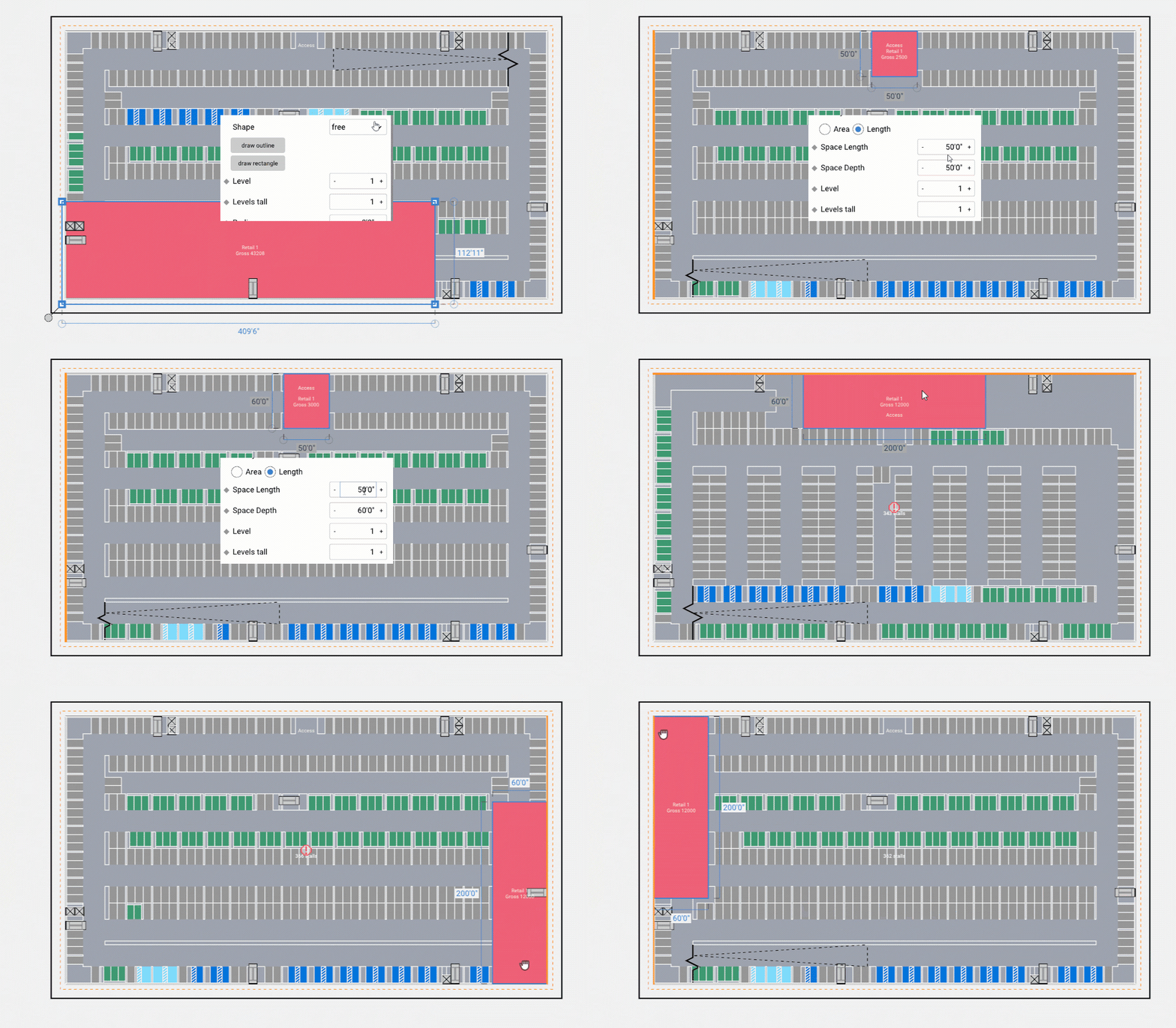
Custom spaces inside a garage are defined with the standard space drawing tools, so shape, dimensions, and level assignment are set by the user rather than inherited from whatever geometry infill produces. A space can also be hosted on an edge of the structured parking mass, snapping to the face of the structure so only width and depth need to be set. The garage responds to the space instead of the space conforming to the garage: a defined footprint holds while stalls and drive aisles resolve around it, and the stall count moves to reflect the program decision rather than the program bending to the count.
Mixed use sites reach a usable plan in fewer iterations, with no time spent tuning infill targets or rebuilding garage program by hand outside TestFit. Leasable square footage and parking counts reflect the program as designed, which lowers the risk of carrying inaccurate areas into a Pro Forma or a stakeholder conversation. Garage integrated plans can be shared without caveats.
Housing Updates
Pro Forma in Generative Design
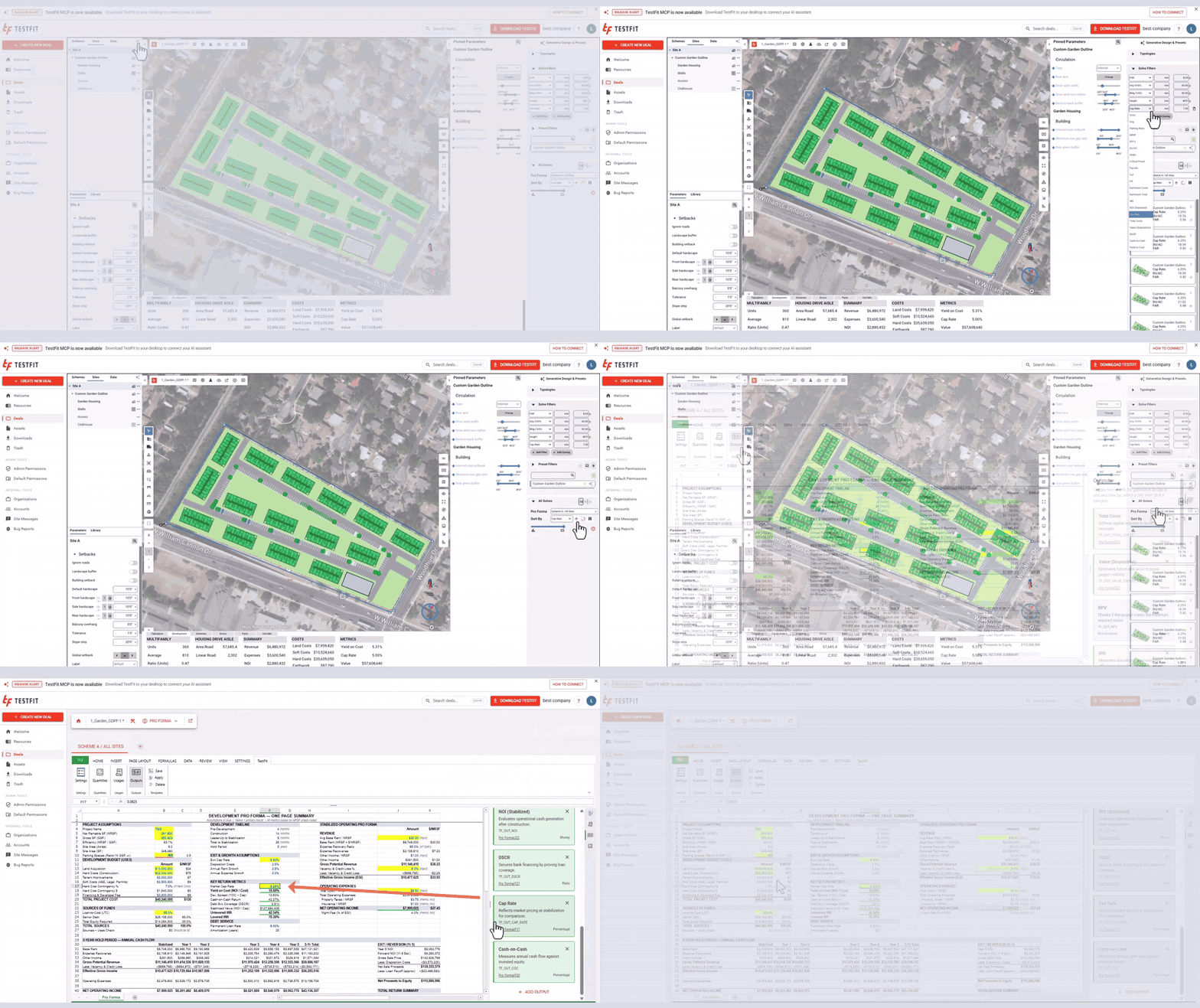
Every solve in a generative design set now carries its own full Pro Forma. Set a minimum, maximum, or range on any line item and the set narrows to the schemes that clear the number. Sort by IRR, yield, cost, revenue, or any other line item and what remains orders itself by the measure that matters on the deal. Because a complete financial model is computed on every solve rather than the few a team has time to build, the scheme at the top is the highest returning option the site supports rather than the best of a short list.
Whether a scheme pencils is answered across the whole solve set at once. A developer commits knowing what that design earns relative to every other option the site allows, and schemes that miss the target drop out before more design work goes into them.
Parcel Editor
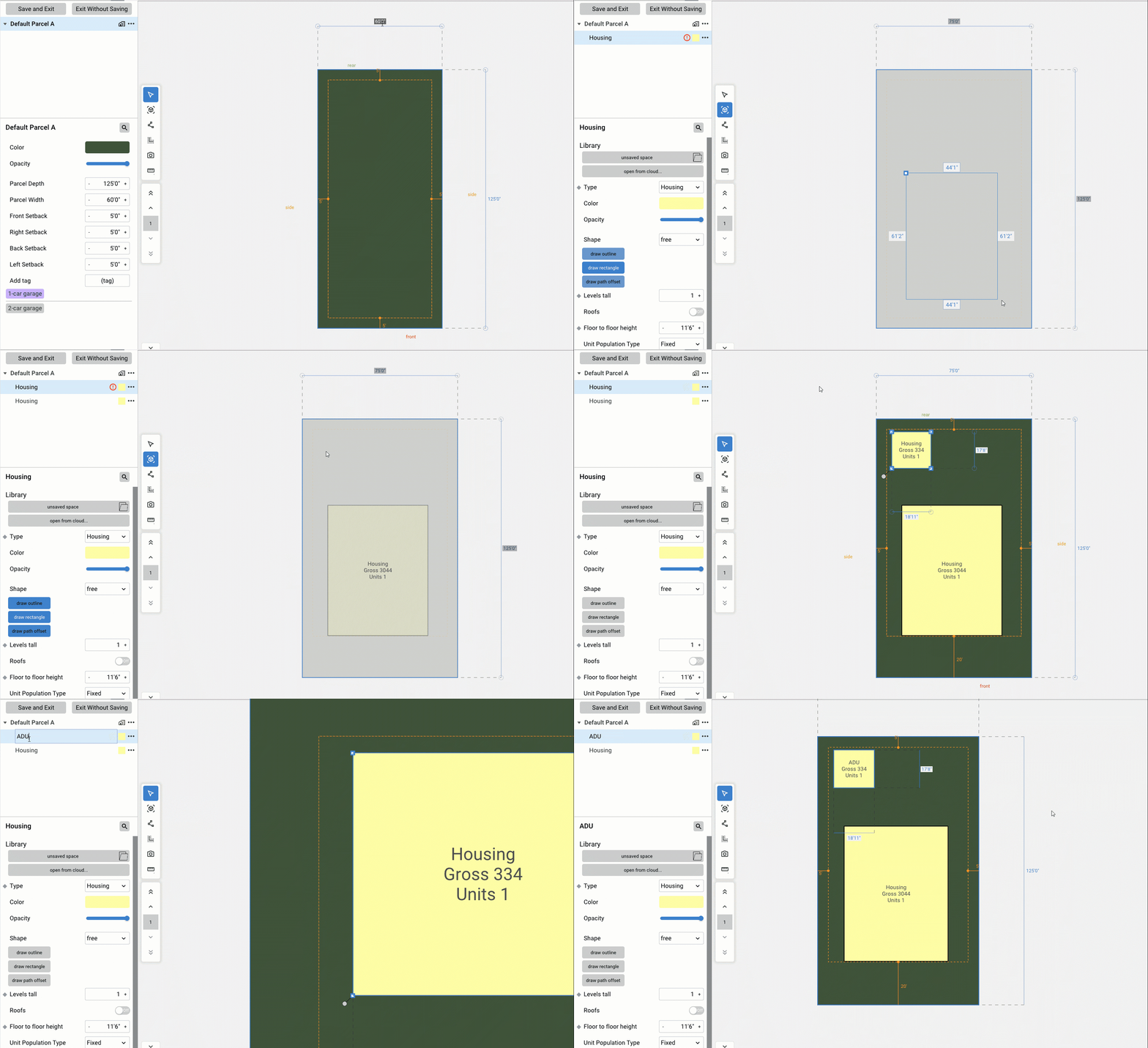
With the Parcel Editor you can define a typical parcel from the ground up, including the buildings, structures, and site elements it contains: a primary residence, an ADU, a custom driveway, or accessory structures. That parcel definition then drives the Subdivision presets throughout the model, so every parcel placed or iterated across the site carries the specified configuration. The workflow is modeled after Retail Assemblies. Define once, iterate throughout.
Preset iterations now reflect actual design intent instead of a generic stand in. The result is subdivision presets genuinely tailored to the project, plus a foundation for building out more customized assembly types that can be iterated at scale within TestFit.
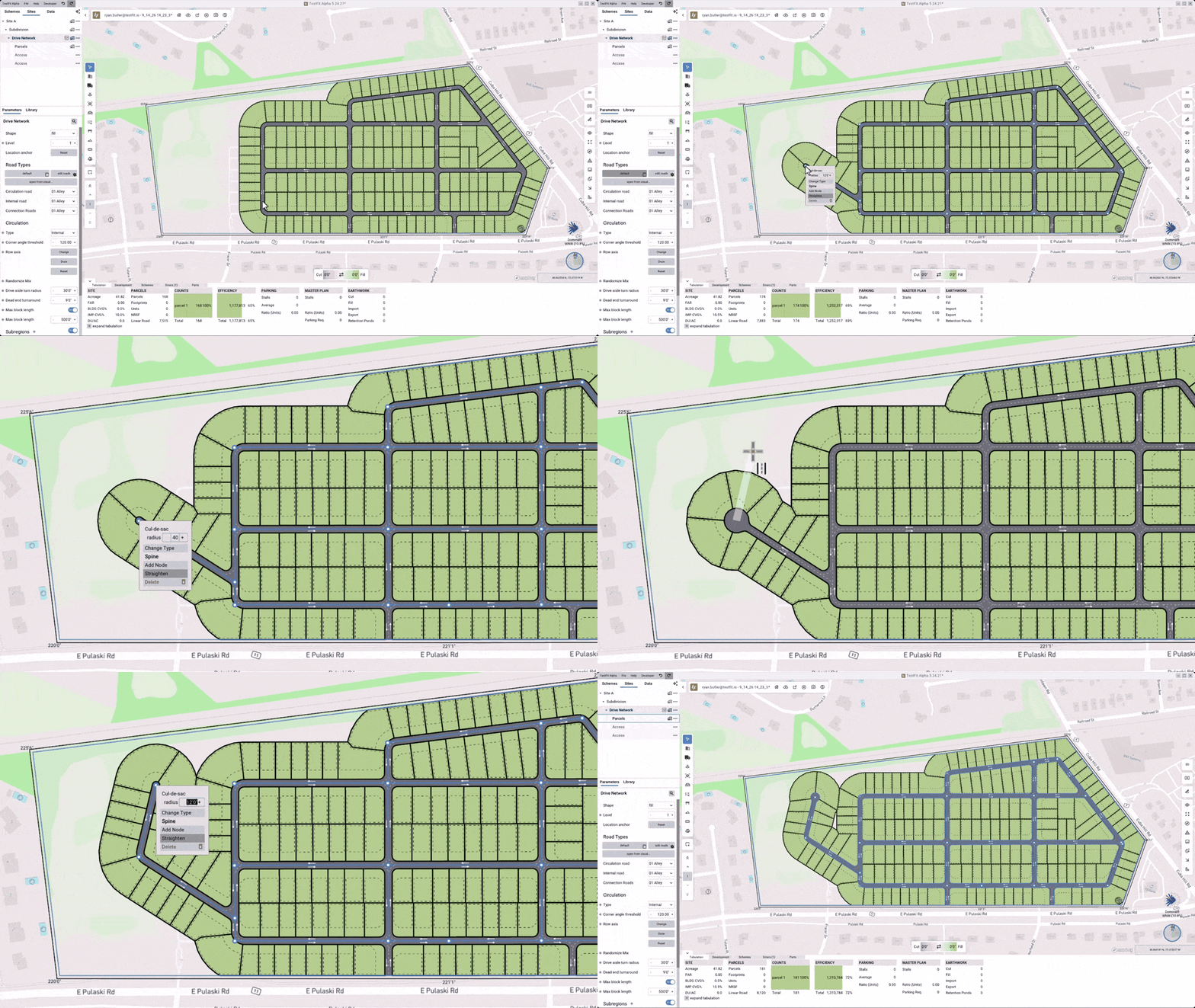
Manual Cul-de-sac Placement
Turnarounds can be placed at any terminal point in the drive network, with the width set by the planner. Each one is placed and sized directly, without editing the road network or giving up the solved layout.
Street endings stay under the planner's control, and neighborhoods read as realistic, buildable communities instead of computer generated grids.
General Updates
In-App Guided Tips
Ask the connected assistant for tips along the way and guidance appears in the TestFit window as pop ups tied to the operation being attempted. Each pop up explains the step required to move forward. Complete that step and the guidance advances to the next one, staying with you through the full operation. The hints read the state of the project, so they describe the actual site, the actual layers, and the actual next click rather than a generic example.
Learning an operation happens by completing it, which folds training time into billable work instead of setting it beside it. Capability grows past the few commands a new user starts with, and more of the product gets used on real projects.
.png)
Watch a Quick Overview:
→ Book a demo to see these updates on your site.