Revit, AI Copyright Law, and Architects
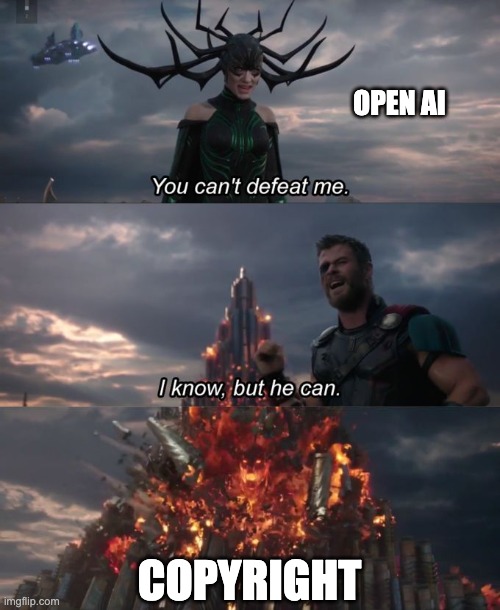
Right now Big AI is attempting to destroy the entire industry of architecture, and it seems like everyone is embracing it. If OpenAI is successful in its lawsuit against copyright, you might as well kiss your (Long Term) architecture copyright protections goodbye and light your licenses on fire. Software that used to be an asset to you will all of a sudden be a moral grey area.
A note on terms before the Revit part, because the AI copyright fight is really two separate questions, and the first sentence above folds them together:
- Input: may an AI company copy copyrighted work to train a model without permission? OpenAI is on the defending side of that fight, and that is mainly what the copyright suits against it are about. For architects it decides whether a firm’s drawings can become someone else’s training data. In the LinkedIn thread under this post I asked the input version directly: when firms start bulk uploading their datasets into an LLM, do they own the derivative work, or does the group that “stole” IP by ignoring copyright?
- Output: does material a machine generates have an author at all? Copyright protects human authorship, so where no person made the creative choices there may be nothing to own. This is the question that reaches Revit, because so much of a Revit drawing is procedural: geometry the software generates from rules rather than lines a person draws.
None of this is legal advice. It is how an architect who builds procedural software reads the risk.
Revit’s Risk To Architecture Firms
Take Revit’s wall-joining behavior as an example:
The user places walls.
Revit automatically cleans up intersections, joins, and trims geometry.
This “cleanup” is invisible logic, not hand-authored geometry.
So under a broad AI definition, the output:
Was not directly authored by a human,
Was created through hidden algorithmic behavior,
And might be argued to be outside copyright protection.
That’s exactly the argument being made against LLMs.
So if OpenAI loses — procedural software is safe.
But if OpenAI wins — Revit drawings might be at risk.
To state that narrowly: a win for OpenAI on training would not, by itself, take copyright away from anyone’s drawings. The risk is that arguments travel. The reasoning used to deny an author to AI output (no person made the expressive choices) could be stretched to any software that generates geometry. That is a worry about where courts draw the line, not a ruling anyone has made about Revit.
Core Modeling Behaviors At Risk of Invalidating your Copyright
These are built into the way Revit handles model elements. Read the list as an inventory of procedural behavior, the places a strict “no human author” reading would look first, not as a list of legal rulings:
- Wall Joins & Cleanups
Automatically trims/intersects/join walls based on proximity and connection rules. - Automatic Room Bounding
Rooms calculate boundaries from walls, floors, and ceilings algorithmically. - Roofs by Footprint / Extrusion
Revit generates intersections, slopes, fascia extensions. - Floors & Ceilings
Boundary sketching with automatic fill and slope cleanup logic. - Join Geometry Tool
Procedural logic determines material priority, cleanup order, and shape merging. - Cut Geometry Tool
Subtractive logic that affects element intersections procedurally. - Automatic Dimensions (Temporary)
Revit guesses relevant constraints (e.g., alignments) and shows dimensions.
Family Behavior & Nesting At Risk of Invalidating your Copyright
Family behavior includes several procedural systems:
- Parametric Constraints
Geometry changes based on formulas or input values, not direct modeling. - Adaptive Components
Geometry adapts based on host surface or point placement — highly procedural. - Array / Repetition Tools in Families
Automatically repeat components based on spacing/number parameters. - Face-Based Families
Auto-align and shape components to curved or sloped surfaces. - Hosted Elements (doors, windows, etc.)
Their location, cutouts, and integration with host walls are all generated.
Annotation & Documentation Tools At Risk of Invalidating your Copyright
Not geometry, but also algorithmic:
- Tag Auto-Placement
Tags automatically position themselves and pull data from the model. - Schedules
Procedurally generate data tables based on filters and categories. - Material Takeoffs
Derive quantities from geometry, not manually entered values. - View Templates
Procedurally impose rules across views (e.g., visibility, scale, filters).
Stairs, Railings, and Ramp Tools At Risk of Invalidating your Copyright
These are heavily procedural, like hundreds of params procedural:
- Stair by Sketch / Stair by Component
Geometry is generated based on code rules: max riser height, min tread depth, etc. - Railing Systems
Posts, handrails, and rail segments are generated based on paths and rules. - Ramp Generation
Automatically adjusts slopes and landings based on constraints.
Site & Contextual Tools At Risk of Invalidating your Copyright
- Toposurface from Points
Procedurally generates mesh from point data — not hand-modeled. - Building Pads
Automatically cut into topography using a defined boundary. - Property Lines from Table
Generates geometry from legal metes and bounds input.
Constraint Systems & Behavior Tools At Risk of Invalidating your Copyright
- Dimension Locks
Locking triggers automatic adjustments to keep relationships stable. - Align Tool + Pinning
Forces geometry to shift procedurally to maintain alignment or anchoring. - Hosted Constraints (e.g., level constraints on windows)
Geometry moves with host level or surface.
100% of TestFit is at Risk of Invalidating your Copyright
Right now (Early 2025), the copyright to a Revit/ TestFit model or drawing belongs to the architect, as long as the final output shows evidence of human authorship. In TestFit we make for damn sure human authors have the capability of manually adjusting geometry to the modicum of input required by law. If the law suddenly changes we will have to decide if our future is with the Architects or the Patent trolls.
Two qualifications. First, “belongs to the architect” is shorthand. Human authorship decides whether there is a copyright to own, and what it covers is the human contribution. Who owns it (the architect, the firm or the client) is a separate question settled by employment and contracts, not by the software. Second, patents are a different body of law; the exposure on this page is copyright.
The manual-editing commitment isn’t new. TestFit’s goal since 2017 has been Generate locally → Edit locally, and in 2020 I wrote that if we don’t continue to introduce manual editing and manipulation tools, we are no better than a black box.
Manual Adjustments = Human Authorship
If the architect does things like:
- Override or edit wall joins manually
- Adjust geometry that was auto-generated (e.g., move, trim, split, override)
- Modify constraints, parameters, or family behaviors
- Customize tags, dimensions, or annotations
- Make design decisions visible in layout, materiality, or form
…then they are exercising creative control over the result — and that creative input is what copyright law protects.
The protection follows those choices. It does not automatically spread to every line the software generated around them, which is why the last item on that list (design decisions visible in layout, materiality, or form) carries more weight than the first.
Legal Principle: “Modicum of Creativity”
U.S. copyright law (via Feist v. Rural, 1991) only requires a modicum of creativity for copyright to attach. The bar is low — even a small design decision, layout choice, or non-standard configuration can qualify.
Feist is the Supreme Court case on originality: a work must be independently created and show that modicum of creativity. It sets how much creativity a work needs. It was not about software or AI, and it doesn’t decide who, or what, can be an author. That human-authorship question is the one the AI cases are fighting over.
So even if Revit starts with procedural logic (like auto-joining walls), once the architect:
- Overrules,
- Modifies, or
- Intentionally designs around that logic,
…the work becomes human-authored, and the architect owns the copyright.
More precisely: the architect’s contribution is human-authored and protectable, and ownership is the contract question above.
Why This Matters with AI
The debate around AI-generated content (e.g., ChatGPT or Midjourney) hinges on whether a human meaningfully contributed to the final output.
If an LLM or AI tool does everything, with no creative edits — courts may say: no copyright.
But with Revit, if an architect touches up or intentionally guides the output, it’s no longer just Autodesk’s procedural logic — it’s a hybrid work with clear human authorship.
The Risk
If courts ever rule that automated outputs with minimal human involvement are not copyrightable, then:
- Drawings that use only Revit’s defaults (e.g. fully auto-generated sections, no tweaks), or say something fully driven by the design automation API, or all of TestFit’s procedural codebase
➜ Might not qualify for protection.
But right now, any reasonable use of Revit that includes human judgment and revision is protected.
“Right now” means April 2025, when this was written. The law on AI authorship is still moving, so check current guidance before relying on it.
Architects meet copyright from the other side, too. The model building codes we design to are copyrighted books, but once a city adopts one, the adopted text is law, and the Fifth Circuit has held that, as enacted law, it is in the public domain. That question is covered in Code as Shared Rules.
The Ask of the Powers That Be
I am (always) disheartened to head over to the AIA website to hear about their top priorities. Here is their self-reported list: https://www.aia.org/aia-architect/article/7-key-issues-ballot-architects-and-aia-election-season
If I was the AIA, I would drop 100% of what I was doing and focus on how to defend Architecture from AI. The value of renderings are cheaper than the time/electricity they took to generate them. Please wake up–listen to people in their 30s and 40s. Take a stand. Make a position. Do something. Anything.
Why drawings and not renderings? As I put it in the LinkedIn thread under this post: drawings are contract documents and have all of the value; renderings have become a commodity, with little to no moat. My rough estimate there was that 70% of an architect’s revenue is drawings. The position worth taking is specific: when does a drawing made with procedural or AI tools have a human author? Argue it wherever that line is being drawn, before someone else’s case draws it.
The Judgment
Treat every generated drawing, whether it’s a Revit wall join, a TestFit layout or an AI option, as unowned until a person has made a design decision in it. Don’t ship the first generated option. Change it on purpose, in ways that show up in layout, materiality or form, and keep the file history that shows you did. Six months after this post I put it bluntly in a LinkedIn comment: if users accept the first automatically generated option without editing it, nobody owns the copyright, so always adjust generated content so that legally it’s yours. That is a rule of thumb, not a ruling, and the adjustment has to be a real choice, not a nudge.